Showing posts with label English. Show all posts

Wednesday, January 1, 2014

15 Niigata

We arrived to Niigata late lat night, in a huge truck. I always hoped we would get a ride in a big truck while doing all this hitchhiking and i was so excited that we did. Actually, if that guy hadn't picked us up and gave us a 300 km ride on the expressway i have no idea how we could have made it to Niigata the same day. We were riding in the loft, behind and above the drivers head in his sleeping space. It wasn't the most comfy seat, but I enjoyed the view - I have never sat so high on the road. 

He took us all the way into Niigata city, and dropped us off at a convenient convenience store parking. I mean , it was convenient for us, because it was in the center, not so much for him, his truck occupying almost the whole parking lot. I would say it is an art to maneuver a big truck in the narrow streets of the lego-like cities in Japan. 

We didn't even know that one of our funniest couch surfing experience is still awaiting for the night. We were staying in a geek house. And if you don't know what that means, I am not surprised. I didn't know. We arrived to an old Japanese two-story home, and we were welcomed by Haru, our host and seven other guys, who are sharing the same house. They were all sitting in the living room, so you would think they are very sociable. Well, no. They are geeks. And they introduce themselves as geeks, they have this strong geek identity. It means they are always on their computers. They all had MacBooks and we were sitting around in the living room, each one of them with a laptop. When I asked what they do for a living, some said they were IT students, others had IT jobs. It was a totally new culture and layer of society unfolding before my eyes. The lack of physical activity and eye contact was still bearable, but one thing that really made me a strong non-believer of the macBook religion was the lack of hygiene in the house. I guess you can't stay online while you are cleaning the bathroom, and obviously it is too much time staying disconnected, so I would guess they haven't cleaned for the last couple of years. The bad news was that we had to sleep on the floor in the living room. I didn't know if I should laugh or cry, then I decided to laugh for three reasons. 

1. we made it to Niigata and we have a place to stay with funny but friendly people.  
2. we are here for only one night 
3. on our list of all the places we have stayed we agreed it is only the 3rd dirtiest. And if we have survived the other two, this won't be a challenge too big!


Knowing this, we gave special thanks for having sleeping bags and fell asleep happy, but setting the alarm at 7am for Sunday morning, because the guys said their favorite cartoon starts at 7.30 so they will be down in the living room by then. 

geek living room, with Hunor blending in

14 Nomi and Noto Peninsula

On a sunny Wednesday afternoon Kumi and Naoki dropped us off by the road leading to Nomi, to a family I was staying with 4 years ago with JapanTent, a holiday program for foreign students in Japan. A warmhearted and always smiling lady, Kaori and his more reserved but friendly husband Tetsu welcomed me again and Hunor for the first time in their home. I was looking forward meeting with the grandfather too, who makes the best umeshu (sweet liqueur made of Asian plums) I have ever tried. But they told me he had been hospitalized with cancer. These news made me appreciate Kaori's smile and positive spirit even more. We talked and drank throughout the whole evening and suddenly changed our plans too (the good thing about hitchhiking is flexibility): we were planning to head on to Nagano the next day, but there is a remote and beautiful peninsula in Ishikawa prefecture, Noto, which is also said to be a spiritual place and it has always been on my mind. Also, the weather started to clear up and we have been missing the outdoors very much. We had a tent (although not waterproof) so we decided we would spend the next few days camping on Noto. 

night in Nomi

Hunor's first kanji! I have to admit it looks better
than the signs I made...

After a few rides and a fantastic morning nap between them in a wash&dry, we were in Noto peninsula, staring at the sea in dripping rain again. The further up north we penetrated in the peninsula the more it started to look like an enchanted land with dramatic rock formations, old wooden farmhouses and small fishing ports. One of the most famous rock formations is Ganmon on the Kongo Coast. Ganmon means rock-gate and it is indeed the entrance of a spacious cave on the shore. According to legend, Minamoto Yoshitsune was hiding in this cave when he was running away from his brother, Yoritomo, the founder of the Kamakura Shogunate. 

hitchhiking with a lovely family in Noto

a real treat on Noto...

Unfortunately the more north we got, the less likely it was to get a ride. The good news were that the weather cleared up and we found a nice and cozy spot for camping. It was right in front of a rock formation that is called Hatagoiwa, and according to local legend, was formed when a Goddess threw her loom into the ocean. It is a formation of two rocks interconnected by a thick rope - this is a symbol of matrimony. It was an enchanting and mysterious place to be, very calming and energizing.
We set up our tent, watched the spectacular colors of the sunset after rain, ate our dinner of leftovers and were surprised that the formation in front of our eyes was illuminated by a strong light from the shore. We enjoyed the specular view and the starry sky from our private balcony for a few more hours before going to sleep. 

Hatagoiwa

sunrise from "our balcony"

The next morning we were excited to go to the morning market in Wajima city, the northern part of the peninsula, but we had to face the reality of backcountry. Nobody would pick us up for hours. Eventually we walked for about an hour to the next village, bought some fruits and bread for breakfast and went to the beach to take a break from our own negative thoughts. After all, nobody was responsible for us, so we did not have the right to be offended by not getting a ride. Usually my rule was to take a break of trying to hitch a ride whenever I start to turn demanding, skeptical or bitter about it. Besides being irrelevant, none of those states of mind are good for your health. 
We ended up having our breakfast on the longest bench in the world (what a treat). And then, although apparently as September started one day ago, it was already autumn and nobody was in the water, I still decided to take a swim. The last time I was in the ocean was in Yakushima, and I was craving for salty water. I have seen five or six stingrays in the water, got refreshed and a bit homesick for Okinawa. 

Hunor brushing his teeth by the longest bench of the world


In the afternoon we eventually got our ride to Wajima. A guy picked us up, maybe same age as Hunor and he told us he had seen hitchhikers once a few years before (I see. This is how often people try to hitch a ride here!), but he was in a hurry and couldn't pick them up. He felt bad since then, so he wanted to make up for it. Good for us! He gave us a small tour of the spectacular rocks on the shore and took us all the way to Wajima. We were planning to come here for the morning market which was obviously long over by the time we arrived, still it was a lovely small city with more structure and interesting buildings to it then we have ever seen in the mostly concrete cities and towns we have visited in Japan. To my utmost surprise, we found a 1:1 replica of my favorite statue, the Nike of Samothrace right in front of the door of the town hall. I really wanted to ask the mayor why this statue and why in the doorway. Maybe it was there to intimidate people who were trying to go to the town hall to complain. 

city hall entrance in Wajima
with Nike greeting the visitors

house in Wajima

After a ride with a friendly young lady, we were at the rice terraces in perfect time. First, because it was autumn harvest, so the fields were alive: full of working farmers. And second, because it was late afternoon and the beams of the setting sun caressed the rice stems with a loving yellow light. After they cut the rice crops they stack them and hang the stacks on a high wooden structure to dry. I went up to ask a group if that was ok and the birds won't steal the rice. Their answer was a short no and an invitation to try their work, so I was helping them hang the stocks for the next 15 minutes. Mostly old people were working, the lady who took a break while I was taking her turn must have been in her eighties. They looked disillusioned, tired and worn out. They said in these rice fields they do everything manually and of course they can produce less and be no competition for mass production. Lot of work and no profit - they said. For us tourists however it was a dreamlike experience. The terraces moving with the rhythm of work and the constant music of waves behind them, like a slow, endless dance. 

rice terraces


We spent one more night in Noto, but we never made it to the tip of the peninsula. It has been one of the hardest places to hitch a ride, so I don't recommend it to anyone without a car, except with plenty of time and readiness to walk a lot.

wooohoho, Japanese can be a little too tense when it comes to time...


It is an amazing place, a journey back in time and a humbling meeting with peaceful old spirits haunting the rock formations, the caves and the old roads along the coast.


Saturday, December 28, 2013

13 Komatsu (Ishikawa)

As I have said, the Tiare Heipua dance studio in Komatsu city, and its energetic and powerful leader Heikapua, my beloved dance teacher awaited us with the offer of intense dance and drumming practice and four shows over the weekend. For me, it was a dream. My body was out of practice but it was craving for dancing and for professional instruction, and Hunor was the same with drumming. The studio, with all the costumes, instruments, Polynesian objects and decorations is an enchanted playground. One night we were staying there late, drumming, skateboarding, dancing, playing badminton and doing handstands. I got a glimpse into what it means to belong to a performing team, sharing responsibilities, fun time, joy, sorrow and the excitement and tension of performance. Once again I wished I could stay longer and be a part of it and become a better dancer but we knew we had to leave again.
On Sunday we managed the three performances in one day quite OK, to my surprise, I have to admit. Heikapua asked me to dance solo to live drums, what has been my dream since I have seen a Tahitian performance the first time 6 years ago. I know I still have a lot to learn but the opportunity gave me wings. 


The next days I was working on a painting in Naoki&Kumi's living room. We were guests at their house on most days that we spent in Komatsu (they live in a nearby city, Kaga, famous for textile dyeing) and they asked me if I could paint something on the shoji screens in the house. First of all I wanted to thank them for their hospitality and second, it was a fascinating challenge to paint on a screen door, so I said yes. It took me one night and a day to finish it, with the back support of the whole family. Kumi's energetic and always smiling mom was sitting on the couch behind me the whole night, praising the work and talking. She said, it is too fascinating to see a painting being born, she couldn't go to bed as long as I was working. Kumi's son took his grandma's place the next morning, first just watching and then helping me with the colors, working silently and very carefully. (You can find the photo of the finished piece on my website, here.)


Our last night we celebrated with the completion of the painting and a rich dinner we ate altogether four generations, from Kumi's grandma to her son. They said it was the first occasion in a long time that they sat down to eat together. I am always happy if our presence brings people together.

Friday, December 27, 2013

12 Kobe and Osaka

We had to stay one day longer in Hiroshima than we expected because a typhoon was sweeping through the city. It was again a good day for catching up with ourselves, we cuddled up and stayed indoors. Before I started traveling I couldn't imagine that not having a home, a routine and a bed, meeting new people everyday and constantly adjusting to new environments would be so demanding. To have an extra day somewhere, empty of plans and meetings, blessed by some personal space and private time is a real treat. In other words, we didn't mind the typhoon at all.

We finally set out on a still rainy but way less windy Sunday morning and decided (we were becoming more and more experienced hitchhikers) that the best would be to take a short train ride out of the city and start waving our cardboard signs outside of city traffic. It proved to be a good plan. Two young girls picked us up after about 15 minutes of waiting. They were going to a nearby city for a weekend drive and were excited to hear our travel stories. We even gave them a short concert from the backseat, Hunor playing his jaw harp and me playing my sanshin. We had fun in the car but it was less fun to get out and start to look for another ride in the pouring rain. 


We were still 300km from our final destination. Who would want to pick up two soaking foreigners?… We were still smiling - although I have to admit it was not the most honest smile out there under the thunderbolt and the weight of my still too big backpack. After about twenty minutes even our cardboard sign melted in the heavy rain, so we gave up and looked for shelter by the closest convenience store. I thought I could give a chance to ask around and the miracle stuck like lightning after all the thunderbolt endured: the first person I asked was going in the right direction and was willing to take us. A middle-aged man driving home from Sunday golf. I asked him if it's OK to play golf in a thunderstorm and he said OK but apparently he wasn't very talkative, so even though I really wanted to know HOW, i stopped myself from asking. He dropped us off in a big parking lot with food stalls, toilets, covered shelters and a lot of people. Perfect for hitchhiking, good for escaping the rain and bearable to stay overnight if we couldn't get a ride. It was not easy. Kobe, our final destination was still about 150 km and although I kept on asking around maintaining my "hey, we are the best travel companions for sure" smile, either they were really not heading there, or they said they weren't because that was the easiest way to get rid of me. We met a lovely tour guide with a bus of elderly tourists, who offered us to give us a 100km ride on their tour bus. It was a surprisingly generous offer, but we liked the spot where we were, so we decided we were going all the way or nowhere. And our efforts were fruitful at the end. A man in his sixties picked us up and gave us a ride straight to Kobe. A retired businessman, speaking very good English. He told us he was traveling in the US in his 20s. "Then you have the kids, and you settle down. When you see the world, and move around, you extend yourself, you take a journey turning mostly to the outside. When you have kids, you learn about yourself and your parents, you re-live and face your own childhood. It is also a journey but you are turning inwards." 

I write so much in detail about our hitchhiking because it is an exciting experience indeed. Leaving the house in the morning, having just a vague plan of where and how you will end up that evening. Meeting people, hearing their stories, learning about their life, having fun, good conversation, or a nap. Riding all kinds of cars. Preparing cardboard signs. Trusting people. Letting people help you and give smiles, share dreams, laughs and positive energy in exchange. I feel this experience is reshaping my personality.

We arrived to our couch surfing host's place around 9 in the evening, had a good conversation with her and then we slept like babies dry and warm after a wet but adventurous day. 

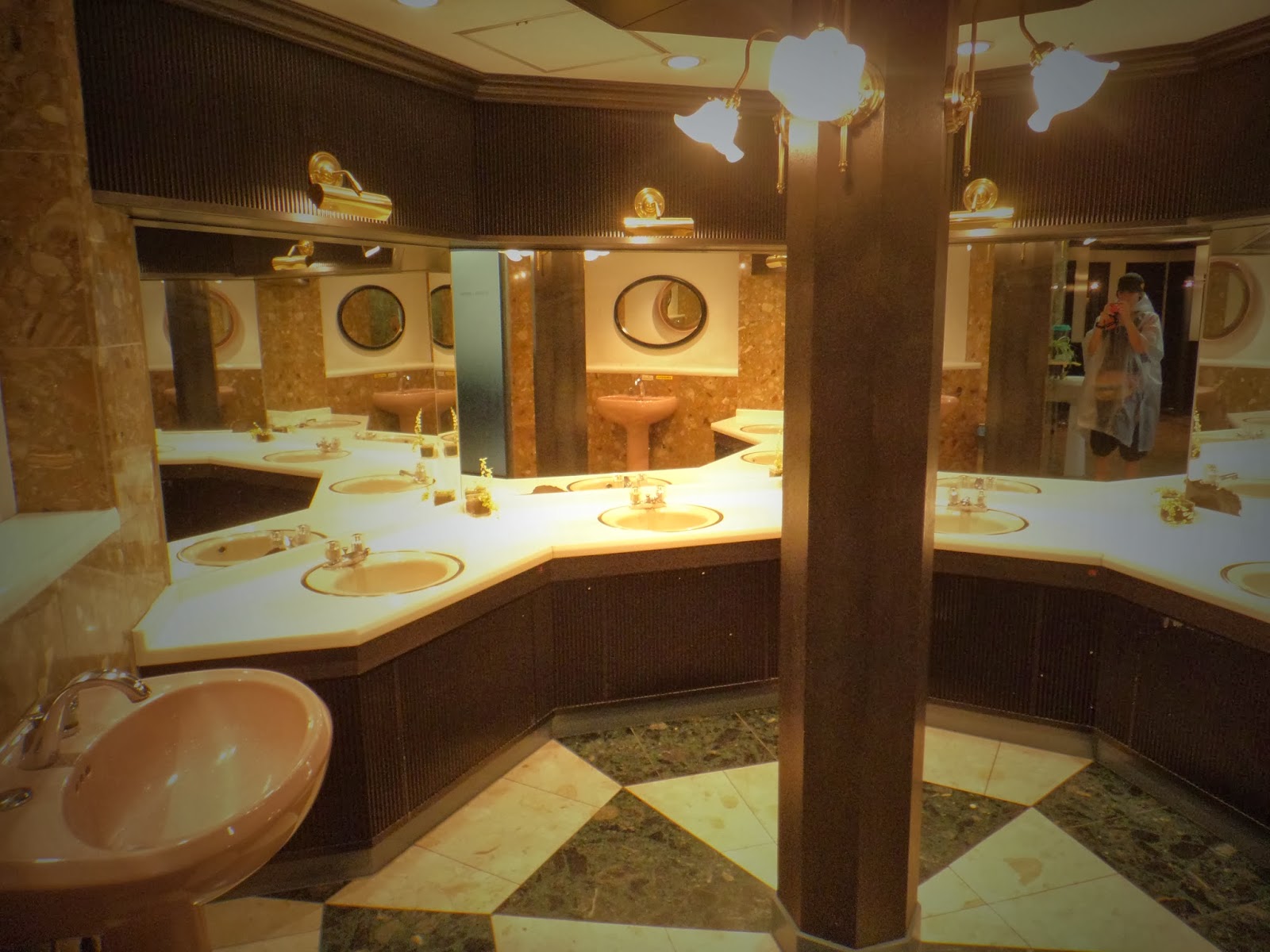
The next morning it was raining just for a change. First we decided to explore the area around, and we soon realized we are in the funniest part of town - at least for foreigners. It is the Ijinkan district in Kitanocho. Kobe was one of the first open ports for western, especially European ships, and that turned it into a rather international port. The Ijinkan district was the district where the stylish villas of foreigners were built together with embassies and offices (or maybe the villas were later turned into embassies, I am not sure). Elegant, classy and green, on the steep hillside with a nice view on the port and the ocean. Today it is very popular among Japanese tourists, because the centenarian houses have been renovated, and they are open to the public as small museums, cafes and gift shops. Each house has a European country for a theme, there is the Belgian, the Austrian, the Dutch house and so on… And of course you can find all the cliches (and maybe more behind the scenes, we don't know, because we didn't feel the urge of paying the 1000yen entry fee to see Europe through the Japanese eye in Kobe…) So you have Belgian chocolate, Mozartkugels and wooden shoes in the respective houses. On the one hand, it is interesting to find such a mixed area in Japan, where usually the only choice as a foreigner is to adapt to the local rules and lifestyle - especially in architectural terms, since there are so many people, there is no space for extravaganza. On the other hand, as a European it was like looking at my culture with a double twist, an experience both interesting and comical. It felt like the artifical image a country creates for itself to attract tourism came to life here. I have to admit, it was a bit scary. They have a public toilet with huge mirrors and with a spacious and lavishly decorated room - for changing clothes, I found out later. Many ladies come here and change into clothes that fit these houses in their imagination (I would say European fashion 50 years ago) and then go for a photo shoot in this imaginary land. Watching them and their enthusiasm was like having dropped into a middle of a fairytale that I don't believe in. 

artistic installation at the public toilet in Ijinkan district


the changing room at the public toilet of Ijinkan district

In the afternoon we took a stroll in the harbor of Kobe, we learned about the great hanshin earthquake that stuck the region in 1995. They left a small part of the harbor untouched to give an idea of the devastation of the earthquake that hit in the early morning and demanded the life of more than 6000 people. 


I was in a gloomy mood, had enough of rain in the last few days, but Hunor was keeping up his good spirits, taking amazing photographs in the reflections of the puddles. This gave me a new perspective and a way to enjoy a city so alien on a rainy day. 

Kobe tower


just because i found it funny...

The next morning we (unusually)took a train to Osaka city, the biggest metropolis we have been in a long time. Endless lines of people and colorful signs for different trains were almost overwhelming. 

Billiken, the little guy who is supposed to bring luck to the Osakans

The only reason we were here was to meet Naoki and Kumi, our friends from Ishikawa who were here for business and were giving us a ride to Komatsu (about 300km north), our next destination, the home of our Tahitian dance and drum teacher. Surprisingly enough, as we arrived to the agreed train station and came up from the underground maze, we ran into Naoki on the street, so it wasn't hard to find them after all. We spent a day with them, visiting the colorful and spicy-smelling Korean district of Kobe and then going to work with them.


Naoki's brother has a beauty salon in town so we headed there. While Kumi was working on a patient, my hair got a generous special treatment from Naoki's brother. As he was trying to comb my hair (it's embarrassing to admit, but) to his astonishment he found a dreadlock hidden in the back of my hair... Naoki told him briefly our story of how we travel without having a home, but having screenings and concerts sometimes on the way, so he invented a new term for us: HOMELESS CELEB. He told me once he was ready with my hair, I will be fancy enough to hitchhike but turn down lousy cars and go only with those who beg me. 


Well, this day never came, but the homeless celeb expression sticked with us. We didn't even know that a chain of performances are waiting for us in Komatsu, and one day we will be stars on the stage, the next again on the road. It is like being your own guinea pig for an experiment in human behavior - you are the same, but people look at you different as soon as the circumstances change. 

11 Hiroshima

This was my second visit to this very touristy area of Japan. I have been here 10 years ago, visiting Japan for the first time as a student majoring in Japanese with a scholarship from the Japan Foundation. The beauty of Miyajima amazed me and the horror of the atomic bomb explained in detail at the Peace Memorial Museum struck me and I thought these are two things that should not be missed while in Japan so I wanted Hunor to be able to see these places. 
Well, we were not very lucky. After all the amazing sunny weather we got in the first weeks, it started to rain, a typhoon was on it's way. We were still very enthusiastic tourists, so we got up early in the morning and went to Miyajima, to get there before the crowds arrive, but it was hard to see the beauty of the place from under our plastic ponchos and through a curtain of rain. Even the deer who always wander around in the park stood freezing under cover. We arrived relatively early, so we headed for the must see, Itsukushima shrine, which is a shirne complex on the shore and a huge red shinto gate in the sea. Again we were not lucky, because apparently at high tide it looks like it is floating on the sea with the temples built on stilts right on the shore facing it. We came at low tide so it was not a breathtaking view. I started to get frustrated with the cold and the rain and our bad luck, but Hunor took it very well, so I managed to tune in to his mood and give up on trying not to get wet and simply stop complaining and it worked. One thing I got to learn (and have to practice more and more) while traveling is that when you give up all the expectations that exist nowhere else but in the guidebooks, in people's stories and in your imagination, you are finally free and open enough to embrace a place as it is at the moment you are there. We explored some of the more unknown temples in the back of the complex and had an amazing time. Senjokaku  (Pavilion of 1000 tatami mats) is just behind the Itsukushima shrine up on a hill. It was a massive hall, the ceiling and the walls full of paintings and sculptures of horses and battles and boats, each one with a mystical story lurking behind it. What we both liked most about the hall was the flooring. Hundreds of years old wooden floors, it felt like those immense pieces of wood with their simplicity could tell more stories than the banners and paintings above. For a few minutes I just walked and danced around on them, feeling their energy, stillness and patience. Then I sat down by one of the huge pillars on the ground and just watched the rain and listened to the thunder for the next half an hour. 

the shinto gate at low tide

When I go to a place I want to enter its atmosphere. It is something like being able to hear the heartbeat of a place for a short while. It is something beyond the guidebooks and beyond my understanding. It is a short period of time, sometimes a moment, sometimes an hour when a place with all its generosity and love turns to me, opens up for me and all my senses are fulfilled with its character. I feel the colors on my skin, I smell stories in the air and see sounds around me. I never know where or when I would get that feeling. Sometimes it comes at a spectacular spot, sometimes in the middle of nowhere but I need to be ready and accepting, no expectations, no frustrations (see above) to block my senses. This is the feeling that I love most about traveling. And I know Hunor has it too, but he would never put it the way I do. He is way more skeptical than that. But I can see it on his photographs. When a place opens up for him, he connects to it through his lens and the place shows him incredible images that he is then allowed to take with him as his photographs.  

We both had a time to connect with Miyajima in the dome of Senjokaku. Before that we were planning to head back to Hiroshima right away but now we had no problem with the rain and thunder. We hiked to Daisho-in, a big buddhist temple complex on the other end of the small town. You could find small jizo statues, official ones in the halls, and cute garden-gnome-like ones hidden in the bush, each of them happy and in a different pose. These small creatures were like small giggles at the foot of a serene temple, secretly stole happiness and life to our tour and as we were concentrating on trying to spot each one of them in the grass, they gave us a free and lighthearted lesson of awareness too. 

We headed back to the city because we wanted to save the afternoon for the Peace Memorial Park. Nuclear energy is not something humans can play around with without serous consequences and the memorial park with plenty of data, photographs and stories of people whose life was taken or brutalized forever by the tragedy of the atomic bomb, burns it into the visitors' head for good.
There is plenty of information about the exhibit, you can even take a virtual tour on the website of the Peace Memorial Park so I will leave thorough exploration and learning to the reader. However, there are two pieces of information that I have discovered on this visit and I will share those. One of them is a wall full of diplomatic letters. I have learned that every time a country does nuclear testing anywhere in the world, the mayor of Hiroshima sends a letter of protest asking them to stop using nuclear energy. He strongly hopes after each letter that it would be the last to write...


The other piece of information was the notion of "nuclear winter". This was the first time I heard about it in detail. I have took a photo of the explanation so I will let you read it for yourself.


Hiroshima is a beautiful city with lots of green areas, although after the atomic bomb, it was predicted that no greens would grow in the area for the next 70 years. The Peace Park with the ghostly Atomic Bomb Dome is a must visit in an time when the question of nuclear energy raises so many questions, doubts and concerns. 


It is not a light afternoon tour, but I would recommend it to anyone who wants to face the future by being brave enough to see the past. 

Thursday, December 19, 2013

10 Shikoku

We wanted to visit Shikoku, the smallest and remotest among the four main islands of Japan, because we have learned form experience that cities in Japan are constructed to be very functional: all concrete and look like they were made with copy and paste, not much surprise and soul food for someone as romantic as me and outdoorsy as Hunor. so wherever we can we look for the remote, the old and rundown and the countryside. However, we stayed longer at Rei's place than we originally planned and a typhoon was coming too, so eventually we didn't have the time and the guts to explore Shikoku, we just shortly passed by. Rei's family gave us a ride from Oita to the port of Saganoseki and from there we took a very short (70min) ferry ride to the tip of Shikoku, Misaki. As seasoned ferry-hitchhikers, we were the first to get off the boat and we were happily waving and smiling by the side of the road by the time the cars started to come. To our surprise, the first car stopped, a friendly young couple with a small kid, and they took us all the way to Matsushima, our destination, where or couchsurfing host was already expecting us. One thing I like about hitchhiking in Japan is that we know the language, so we can talk with the people, learn abut their life, their work, hear their stories. The young father who picked us up happened to work for the Japanese Self Defence Force as a first aid parachuter, which sounded very interesting so I asked him about his work in detail. How did it feel to jump for the first time? Has he got used to the feeling? Does wind make the jump difficult? He was very patient and answered all my questions. After our conversation his wife told him she had never heard so much about his work, so I guess it was good information for all of us. Meanwhile we were passing through a beautiful road winding on the northern coast of Shikoku, small fishing ports, islands in the calm inland sea on our left and mountains on our right. 
They took us all the way to Matsushima station where our host, Annlie was already waiting with her car. Given these circumstances it felt more like a luxury trip than a hitchhiking adventure. It turned out that we were Annlie's first couch surfers, so I felt the responsibility of giving a good impression for her about the system. She is a young medical student, speaks amazing English, and she is full of curiosity and ambition. She was interested in every detail of our trip from planning to the content of our backpacks. It was a good conversation, it made us sort our own thoughts once again concerning the decision of changing our lifestyle and planning our trip. We were proud and happy to show our backpacks, which became a lot lighter and compact after leaving much of our stuff with Rei and sending home a box of things. The eagerness Annlie was showing while listening to our story made me feel responsible for what I do and how I act while on the way. One thing that makes me happy is that I have never felt more authentic, living from my heart then now. I have the chance to experience something I have been dreaming about since childhood. I suppose the happiness and excitement are converted to energy and people around me can feel it. I hope they do, because that is the only thing i can give them for their generosity, for opening their homes, their cars and sharing their time with us. Annlie showed us around Matsushima, we went to the castle and Japan's oldest hot spring, Dogo. We sat down in front of the entrance and just watched people passing by in their yukatas. It was a beautiful sunset with sharp but gentle lights (perfect for Hunor to take pictures).

at Matsushima Castle with Annlie

Hunor taking a foot bath in front of Dogo onsen
the hometown of Matsu Basho, the famous haiku poet is the most poetic city ever: if you write a haiku on the bus you just put it in this box and it might be chosen for publishing 


The next day our destination was Hiroshima, already on the main island of Japan. We wanted to make it up there before the typhoon. Annlie's mom offered to give us a ride to Imabari, the city at the end of the bridge connecting Shikoku with Honshu. I was excited about the next ride, because it goes zig-zagging through small islands connected by bridges in the inland sea. The weather was still hot and it was our longest time to wait for a ride, more than an hour. An old man cutting the grass in a nearby parking lot came to us after about forty minutes, told us not to lose our spirits and handed us two bottles of cold soda with a smile.

Finally a small truck picked us up, and the high seats gave us a perfect view of the inland sea and the islands in the sunshine. 

Three rides later we were in Hiroshima by 7pm. We got a ride with a young university student, who was on his way back from buying his first car, so Hunor took photos of him with his new "baby". Then we met a family of six, who were going to a baseball match of the local team, Carps, and we also learned that this team is very special for the people of Hiroshima. It was founded shortly after the end of the war, as a sign of the locals will to survive even in the impossible conditions of the reconstruction after the atomic bomb. 


The local speciality in Hiroshima is okonomiyaki, which is something between an overfilled crepe and and a Spanish omelette. Veggies, meat and eggs. As we have learned, the big difference between the Hiroshima and Osaka style okonomiyaki is that Hiroshima puts even noodles in the mix. Don't ask me how, but it does work. We met up with my friend from university, Moe, who lives and works in Hiroshima after having graduated, and she invited us to an okonomiyaki dinner. After that we headed to our host's place which was an interesting experience by itself. A young japanese guy with an impossibly big apartment (especially for Japanese standards). He opened it up for counchsurfers, so it didn't feel like a one-to-one home stay thing as usual but more like a hostel. We were seven of us the night we arrived. There was a very active Colombian guy, who proudly introduced himself as someone from Barranquilla, the city of Shakira (well you can imagine that was enough to make me happy), he put on his music and gave a quick latin dance lesson to everyone. We were dancing for hours in the tatami room which was the most surprising ending to a day we started on another island a hundreds of kilometers away.


Tuesday, October 29, 2013

9 Oita

The next day my best friend, Rei and her family drove all the way to Aso from Oita to pick us up. Rei is a very close friend of mine, we met at the university, she was a guest lecturer at the textile department teaching bingata (Okinawan Dyeing). We connected very well from the first moment. She is bursting with energy, very creative, brave and very open too. Most of the time when i try to make Japanese friends, there is a wall that i can't break through but it was different with her. She asked my advice on her important decisions and she took me seriously but we had great laughs together too,  we can talk about everything. I couldn't wait to see her home and spend time with her again. She decided to leave Okinawa about a year ago and went back to her grandma's village to start her own textile dyeing studio in the old family house that hasn't been used for years after grandma had passed away. I was excited to see how this amazing idea and hard task was going. The Chitose Textile Dying Studio is a hub of creativity in the rural Japanese environment. It was entertaining to see the locals coming and peeping in every day, wondering what on earth was this girl doing in the village, She just smiles, shows everyone her new ideas and works and inspires people without even knowing it. I guess even her curious visitors themselves don't know but they keep coming back and bring her fresh vegetables, beer or other small presents. Her world brings color and fantasy to that little village.

Rei-chan, Lili (her niece) and us on the way to Ooita


We were sleeping at her studio, and were busy everyday. We kept asking her if there was anything we could help with, so finally Hunor renovated an old drum that Rei has to paint on, and carved a sign for the studio on granny's old cutting board. I did some English translations for her and worked on a photo-papercut that I had in mind after a sunset shot Hunor took of Rei and I the first night. We are both jumping, so I thought it would look good if i cut wings for us on the photo - to turn us into local angels. 
"Local Angels"

the drum Hunor is working on under the curious supervision of the girls from next door
one four year old asked me: "Is it your man?" "Yes" "You chose a good man!" she assured me and i thanked her.

Hunor carving the sign on granny's old cutting board


We were also busy with preparing to an event she organized for us. Sunday 25 August we were planning to do a screening of Under the Same Sun with a Hungarian and Okinawan mini concert. She and her family prepared everything, invited musicians, and arranged the place: the local Buddhist temple. When we first met the priest he seemed very cooperative but not very hopeful. He said people in this village are hard to get going so we should not expect more than around 30 people at most. I saw Rei was not very happy with the answer. She said she was hoping for a 100. Well, I told her, people who ask for miracles and work towards them, get miracles. She smiled and worked and worked, arranging meetings with the musicians, handing out flyers, brainstorming about decorations. Sunday, when we went to the temple, the place was all prepared, the priest cut bamboo sticks for a special light up and arranged the room for us. While we were preparing the food stall outside together with the priest Hunor had some time to ask a few practical questions from his "colleague" about church government and the everyday life of a buddhist temple. After all, a protestant pastor and a buddhist priest do not meet often so they need to use the opportunity for an inter-religious conference, right? The event started at 7, but people already started coming from 6 and soon the room was full, there were not enough seats for everyone. The sanshin  players started the event with three Okinawan songs, then it was my turn to sing Hungarian folk songs with a local guitarist and drummer. Then Hunor showed his skills on the jaw harp. When i was watching Hunor playing traditional Hungarian melodies on a jaw harp, jamming with a local blues-rock guitarist and a cajon drummer in a buddhist temple, followed by the curious eyes and ears of local farmers, I  was amazed how Rei's web of imagination could wrap all these people and bring them together in this funny capsule of time and space. As I looked at the full house I knew I was looking at a miracle, one that was asked for and worked for by Rei and it gave me goose bums. Her radiating creative energy inspires me so much! The priest told us after the event that there must have been around a 100 people and he has never had so many people at his temple before! Thanks Rei, for showing us a miracle.


Rei made time for sightseeing too, we went to a lotus field, which was the first time for me to see this intricately elegant yet simply funny flower. They look like shower heads, but then they have these beautiful light pink blossoms and perfect petals and what's more, water-repellent leaves. I mean this all just sounds impossible and contradictory, but when you look at it, it makes sense. No wonder it is traditionally a holy flower, the flower of Buddha. 


After that we visited Beppu, a city famous for hot springs and we went to an interesting restaurant. The name is Hell Steam Restaurant (very inviting). All kinds of food are steamed in wells built on top of a sulphuric hot spring. It is said to be very healthy and it is delicious even without any extra spice, since the salt and the aroma of the hot spring penetrates the vegetables and meat. We also visited a hot spring, and took a mud bath. It was a great time but we smelled like pigs for about a week after. Especially because we did a small competition with Hunor: who can cover his/her full body more elaborately. 


Rei is so playful and active, and she also has a nine year old niece who is a small artist, so creativity is all around the place. We spent the nights drawing and painting together on big pieces of paper, being immersed in colors, lines and circles. She and her sister, her niece, her mom and her stepdad had a great impact on me. A loving and caring family of artists, living together, sharing their life, their food their love and their ideas. I was totally inspired by the week we spent together.


Monday, September 23, 2013

8 Aso Volcano

It is hard to admit, but we are still sore of the Ryujin Sugi hike in Yakushima, and we are the only visitors of the camping, with amazing greenery and mountain view, so we decided we would stay in (I mean literally out, under a tree by our tent) and relax for a day. We have had so many experiences the last few days, met people, heard stories, we need digestion time before we go on. So we sat/laid under a small tree and stayed there for a good day, moving our towel one inch/hour around it, as in a very slow ritual dance, to keep us in the tiny shade it gave.  

digestive period


The next day we are full of energy. We go up the hill to conquest the volcano, which is still active, Sounds a bit too adventurous, but as we know everything is super safe in Japan, so  I guess if it's a tourist spot we are safe. We hitch a ride uphill, then we walk for a short time so we are at the crater in less then half an hour. On the way up I am quite surprised to discover the white cloud that I could always see from the campground at the same spot is not a cloud, but smoke coming from the volcano. The crater is something I have never seen before. A yellowish green pond in the center bubbles and smokes and this sulphuric smoke/steam paints the walls of the crater colorful with a yellowish shade. So, this is how an active volcano looks. I stand there in awe, being humbled by Nature for getting such a glimpse and stay alive. It gives a hint of the power that lies within the Earth under the surface. Scary and inspiring at the same time. You kind of wanna do your best if such powers lie within and you are still given the chance to breathe.


the crater


We were quite unprepared for a hike and sore from Yakushima, so we didn't think we would spend the next five hours going up and down steep montain trails, but we couldn't see in the beginning where the road will lead us, so we explored the ridges nearby and had amazing views of the crater, the cities and rivers nearby, and the sea. Going downhill was quite tough on a steep wall covered with sharp stones. I could hardly believe we are still in Japan, the only signs were some yellow arrows sprayed on bigger rocks, other than that no fence, no sign. Maybe the logic is that they put signs in safe places, just to appear nice where many people go , and where it is really hard and demanding, the few people that take the risk have to be smart enough to take care of themselves. Don't get me wrong, I am not complaining. It was a great opportunity to spend some more time with the volcano and the mountains and to feel small and to inhale (not the volcanic gases) but the power of nature.


the cloud of smoke