Mielott felkeresnenk hiroshimai szallasadonkat, akit szinten Couchsurfing-en keresztul talaltunk, ugy dontunk jo volna vacsorazni. Egy kedves kis etteremben joizuen falatozzuk a hires hiroshimai okonomiyaki-t, mikor mellenk telepszik egy masik kulfoldi. "Ti is Masashi-san nal szalltok meg ma este?" -kerdezi. Nem tudom hogyan jutott eszebe ezzel a kerdessel ismerkedni egy hatalmas varos kellos kozepen, de telibe talalt. Masashi-san furcsa figura. 30 ev koruli srac, hatalmas berelt lakasa egy tombhaz legfelso ket emeletet foglalja el, szallovendegeket gyakorlatilag folyamatosan fogad, egyszerre akar tizet is, es allitolag a lakast csupan a vonalas telefon es fax miatt tartja fenn, melyre a vallalkozasanak van szuksege. Felmerul nehany miert es hogyan kezdetu kerdes a fejemben, de aztan mivel nem ram tartozik, nem teszem fel oket. Lenyeg, hogy tagas, kenyelmes szallasunk van, a hazigazda pedig segitokesz es baratsagos, ugyanugy, mint a velunk egy idoben nala letelepedett hat tovabbi vendege.
A kovetkezo nap a varosnezese. Kisse szemerkelo esoben indulunk Miyajima fele, mely a Hiroshimai obolben meghuzodo kis sziget neve, es egyben kotelezo latnivalo a tersegben. Mire a komphoz erunk, a szemerkelo eso csorgo esore valtozik es egyaltalan nem mutat semmi hajlandosagot az enyhulesre a kozeljovoben. Az utazas ismet tanit nekunk valamit. Megpedig azt, hogy a legszebb helyek is csak ritkan neznek ki ugy, mint a kepeslapokon. Igy pl a gigantikus vorosre festett sinto kapu, mely csak ugy lebeg az obol vizen remego tukorkepe felett a mogotte colopsorra epitett templomegyuttessel egyutt (Itsukushima szentely), kiderul, hogy megiscsak massziv talapzaton all. Ugyanis nemcsak hogy tukorkep nincs, de meg viz sem. Hogy a lebegest ne is emlitsem. Erkezesunkkor teljes apaly van es ugy all ott minden a csorgo esoben, mint a keszuletlen mezitlabas kisdiak a tabla elott leforrazva. Hat ez van, ezt kell elfogadni. Sot, ebben kell a szepet es jot megtalalni, mert ugye azert ebben is van olyasmi boven. Nem lehet minden es mindenki mindenkor mindenre felkeszult. Meg egy ilyen turistalatvanyossag sem a turistakra. Ez is az elethez tartozik, ahogy az eso is meg az apaly is. Atlatszo olcso muanyag esokabatjaink pedig olyan jo szolgalatot tesznek, hogy a maskor bizonyara mindenfele szabadon koszalo apro termetu japan szarvasok is csak irigykedve tekintgetnek utanunk a gyenge alkalmi menedeket nyujto hazereszek alol.
 |
| Az apalyban arvalkodo Otorii (Nagy Kapu) az Itsukushima szentely felol nezve |
 |
| Az esoben meg a terkep keskeny fedele is nyujt valamennyi vedelmet :) |
Lenyeg, hogy nezzuk a dolgokat pozitivan. Az esos ido ujfajta elmenyekre is lehetosegat ad. Arra sarkall ugyanis, hogy keressunk lehetoseg szerint fedett latnivalot. Fenn a dombon, lombos fak mogott elrejtozve szepen ra is bukkanunk egy hatalmas, teljesen fabol epitett templomra, a Senjokaku-ra (az ezer tatami matrac pavilonja)
http://www.japan-guide.com/e/e3452.html, mely megtermett emberdereknal is joval vastagabb evszazados fa oszlopsoraival, nyitott oldalaival, impozans mereteivel kifejezetten hivogato lehet meg napsuteses idoben is. Valami olyan hely ez, ahonnan nem szivesen indul tovabb az ember, holott a belso falakra es vaskos gerendakra kifuggesztett festmenyek serult lovakrol, haboruban vagdalkozo emberekrol, harci hajokrol egyaltalan nem tul baratsagosak. Hanem maga a tobb szaz eves fa szerkezet az ido barazdalta oszlopok, a kimeletes hasznalatban tokeletesre fenyesedett deszkapadlozat tortenelmet rejt magaban. Ha van ideje az embernek kisse meglassulni, mindezt nemcsak megnezni, hanem egeszen kozelrol a rostok koze belatni, szinte hallani lehet, erezni a csond mogott a multat, mely bolcsesseget rejt a figyelmes lelek szamara. Es mindehhez mintha kulon ajandekkent kaptuk volna, a kinti esofuggony olyan lagyan zar korul minket, mintha csak hangsulyozni szeretne a belso csondet es bekesseget.
 |
| A Senjokaku templom |
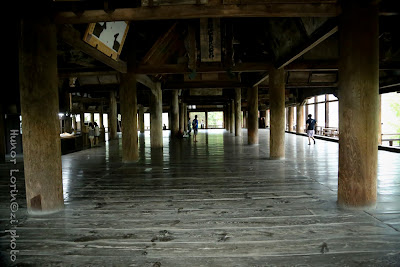 |
| A Senjokaku belulrol |
 |
| A Senjokaku egyik alkalmazottja oson vegig a fenyes deszkapadlon |
Az eso nem akar enyhulni, de mar nem is zavar. Teszunk meg egy laza setat a kisvaroska tulso feleben egy masik dombon felepult buddhista templomegyuttes, a Daisho-in fele
http://www.japan-guide.com/e/e3453.html. Az epuletek kozt kanyargo setanyok es lepcsosorok menten szazaval elhelyezett apro kis vidam szobrocskak (u.n. jizo szobrok) lattan lehetetlen nem felvidulni. Az eso monoton neszezese mogott dobolas hallik, meg egy szerzetes hangja, amint szutrakat kantal. Utazas ez is a lelek es a lathatatlan valosag vegtelen utjain.
 |
| Az egyik templomhoz felvezeto lepcsosor a Daisho-in teruleten. Amennyiben menet kozben meporgeted a bal oldalon lathato imahengereket, az annyit tesz, mintha a rairt szutrakat mar el is mondtad volna. |
 |
| Kis vidam "jizo" szobor. O es meg a kertben talalhato tobb szaz hasonlo tarsa a gyerekek vedoszentjeit formazzak meg. |
 |
| Ok akar Szende, Szundi, Hapci, Morgo, Kuka, Tudor es Vidor is lehetnenek, de nem ok. Tovabbi "Jizo" szobrok. |

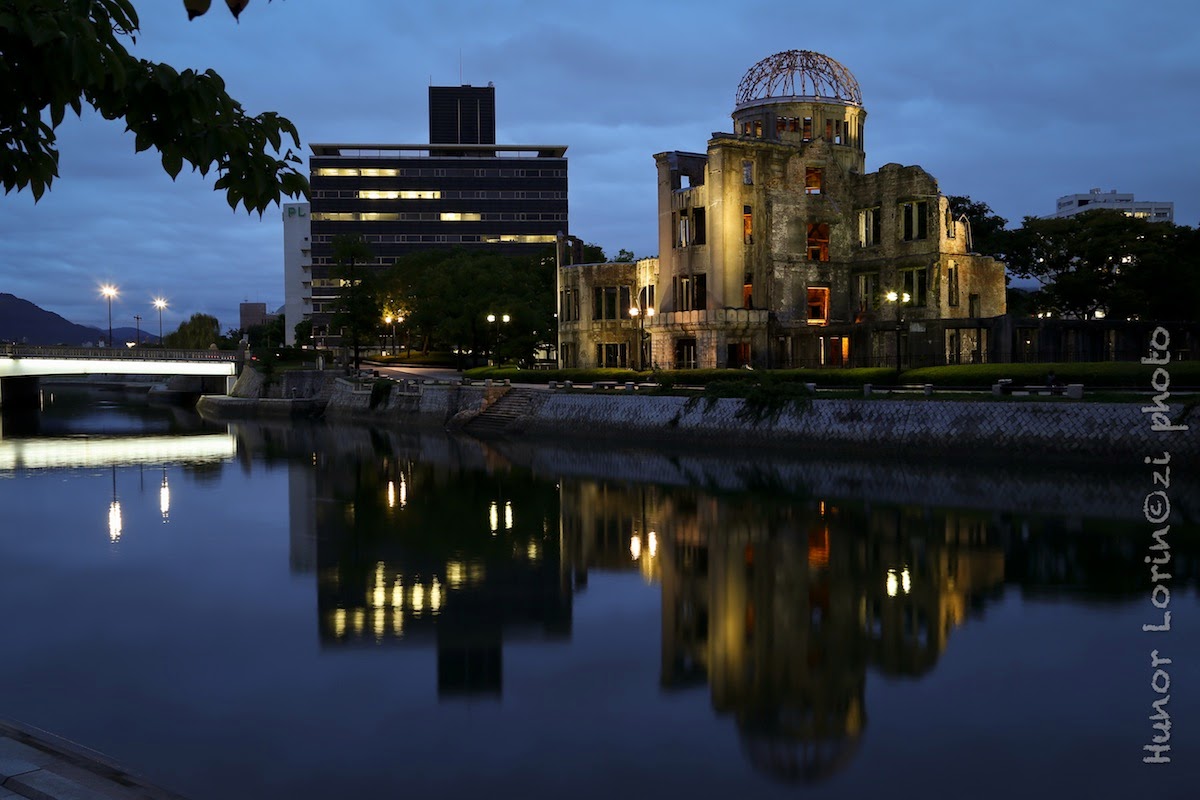
A mai napra viszont akarhogyan is nezzuk, az idonk veges es raadasul gyorsan is telik, es mi meg szeretnenk idoben visszajutni a hiroshimai Beke Emlekpark-ba is. Hiroshima neve azt hiszem sokunk szamara a vilagtortenelem egyik legborzalmasabb esemenye kapcsan ismert. Annak az epuletnek a maradvanya, mely folott 1945. augusztus 6-an ama bizonyos atombomba felrobbant, ma is helyreallitatlan formajaban lathato, orokre arra intve az emberiseget, hogy tanuljon multbeli hibaibol. Es erre az intesre egeszen biztos, hogy mindeki, aki erre jar mindig emlekezni fog. Fokeppen, ha a szep tagas, zoldello park kozepen a muzeumban is tesz egy setat, mely egeszen testkozelbol, szemelyes sorsokon keresztul mutatja be az atomrobbanas borzalmas kovetkezmenyeit. A muzeumban virtualis seta is teheto a kovetkezo veboldalon:
http://www.pcf.city.hiroshima.jp/virtual/VirtualMuseum_e/tour_e/tour_fra_e.html
 |
| 1945. augusztus 6-an reggel 8.15-kor egy amerikai B29 bombaszallito repulo ledobta a vilag elso atombombajat. A bomba korulbelul 600 meteres magassagban robbant a Hiroshimai Megyei Ipari Bemutatokozpont epulete felett. A bomba ereje gyakorlatilag az egesz varost lesoporte a fold szinerol. Ennek az epuletnek a fo falai, mivel a legnyomas kozvetlenul felulrol erkezett, allva maradtak. |
 |
| Amikor megallt az ido... |
 |
| A robbanas elott... |
 |
| … es utan... |
 |
| Minden alkalommal, amikor a vilag valamely orszagaban atomrobbanas tesztelest hajtanak vegre, Hiroshima polgarmestere levelet kuld, tiltakozva az atomenergia hasznalata ellen. |
Odakint az eso alabbhagyott es az eg lassan felderult mire koruljartuk a muzeum minden zeget-zugat, viszont megis megnehezult, elfelhozott lelekkel indulunk neki gyalogosan az immar esti szurkuletbe hajlott utcaknak. Utunk egyenesen a szallasunk fele vezet. Nem sokat beszelgetuk. A muzeum altal elenk tart mult latvanyat megemeszteni nem konnyed feladat.
Masnapra az eso ujra teljes erejevel omlik az elsotetult varos nyakaba. Ugy hatarozunk, nem kell mindig menni valamerre. Az egesz napot hatalmas, tagas szallasunkon toltjuk pihenessel, ezzel-azzal, es kozben halas a szivunk, hogy ebben az idojarasban biztos fedel van a fejunk felett.