Friday, December 27, 2013

12 Kobe es Osaka

Szeptember elseje, vasarnap van. Hiroshimaban ebredunk. A felhokbol mar nem csorog annyira az eso, mint elozo nap, de lathatoan oriasi erofeszitesukbe telik, hogy odafent tartsak azt a meg mindig hatalmas vizmennyiseget, mely a fold fele kivankozik. Egyaltalan nem igeretes nap a tovabbindulasra, de ma mar mennunk kell. No nem mintha barki is kenyszeritene erre, de ha tartani szeretnenk elozetes terveinket, akkor ma mindenkeppen pakolnunk kell. Ma estere Kobe varosaban var minket egy szallasadonk, mai feladat tehat az elottunk allo mintegy 300 kilometer lekuzdese.

Tomegkozlekedessel megyunk ki a varos szelebe, egy stoppolasra alkalmasnak tuno reszre. Mielott a szemerkelo eso meg ataztathatna minket, maris megall egy kiskocsi ket vidam fiatal lannyal. Elozoleg elhaladtak mar elottunk, de meggondoltak magukat es visszafordultak ertunk. Semmi egyeb dolguk nem leven, elindultak a mintegy 80 km-re fekvo Onomichi varosaba egyet ebedelni. Ezzel a mi utunk elso szakasza is konnyeden megoldodik. 

Chiori es Asumi kocsijaban

A kovetkezok mar kisse nehezebben alakulnak. Egy utkeresztezodesben allunk, az egyetlen epulet kozel es tavol egy ejjel-nappali uzlet. Kezemben az elkeszitett kartonpapir tabla, Kobe varos nevevel, egyre inkabb maladozik az erosodo esoben. Esokabatjaink alatt hatizsakostol szarazon maradunk, de ki szeretne barkit is felvenni autojaba az egyre inkabb szakado esoben? Inkabb a kozeli epulet eresze alatt meghuzodva kezdjuk megszolitani a boltba erkezo autosokat. Az otlet bevalik. Rovidesen egy otvenevkoruli ferfi kocsijaban ulunk, aki felajanlja, hogy elvisz a Kobe fele vezeto autopalya egyik nagyobb pihenohelyere, ahonnan biztosan talalunk tovabbi fuvart. 

Az eso tovabbra sem mutat enyhulest, de immaron biztos fedel alatt szolitgathatjuk az autopalya pihenojenek vendegeit. Van itt uzletsor etkezokkel es rengeteg atutazo autossal, megsem jarunk sok sikerrel. Az ido mar keso delutanba hajik, es mar lassan azon kezdek gondolkozni, hogy melyik sarokba huzodjunk be ejszakara. Nehany kedves segitokesz ajanlatunk akad ugyan - pl egy nyugdijas kirandulocsoport tagjai invitalnak, hogy elvisznek szivesen buszukon egy szakaszon -, viszont ekkorra mar ugy vagyunk, hogy vagy egeszen Kobe-ig megyunk, vagy pedig itt ejszakazunk. Vegul egy hatvanas eveiben levo ferfi, aki mar jo ideje figyelte tenykedesunket, lepett oda hozzank, hogy majd o elvisz. Kisse at kell rendeznie a csomagjait a kocsijaban, mert epp koltozik, de majd beferunk valahogy. Toshio-san nyugdijas uzletember. Rovidesen az is kiderul, hogy egeszen jol beszel angolul, igy szamomra is teljesebb kommunikaciora nyilik lehetoseg. Fiatal koraban maga is sokfele utazott hatizsakosan, igy teljesseggel erti a helyzetunket. "Az emberek mindenhol csak emberek. Barhova mesz ugyanaz. Emberek. Sirnak, nevetnek, szeretnek es gyulolnek. Tudod, az utazas kitagitja, kiszelesiti az eletet. Melyseget viszont mas dolgok adnak. Peldaul a gyermekneveles. Magam is elobb utaztam, aztan megnosultem, gyerekek. Szelesseg es melyseg egyarant fontos az eletben." Toshio-san tarsasagaban ugyan este kilenc korul, de megis gyorsan megerkezunk Kobe-ba. 

Toshio-san 
Tiz ora utan nem sokkal mar szallasadonknal, a Kanadabol nem tul regen ide telepedett Emmanal vagyunk. Hosszu nap volt, kimerulten merulunk alomba. 

Masnap a valtozatossag kedveert esik az eso. Ez azert nem tart vissza minket attol, hogy kisse felfedezzuk a kornyeket. Kobe varos Ijinkan nevu keruleteben vagyunk, mely talan az egyik legviccesebb kornyek Kobeban. Annak idejen Kobe volt egyike azon elso kikotovarosoknak, mely fogadott nyugati hajokat. Ennek nyoman az europai stilusban epult kisebb palotak egy egesz negyedet alkotnak a meredek dimbes-dombos varosreszben. Ezek az epuletek azota szepen felujitva, ma mar muzeumoknak, kavezoknak, ajandekboltoknak es nemelyik meg nagykovetsegeknek is adnak otthont. Mivel egy-egy epulet egy-egy europai orszagot hivatott bemutatni - igy pl. Hollandia, Belgium, Nemetorszag, Ausztria… - a kornyek roppant nepszeru a japan turistak koreben. Az alaposabb muzeumlatogatast mellozve a magunk reszerol megelegedunk az utcakon valo koborlassal. Egyreszt a belepti dijkent szedett 1000 jenes osszeget kisse sokalljuk, masreszt mar az utcarol latni lehet, hogy odabent tobbnyire a legalapvetobb turistacsalogato europai klichek vannak osszegyujtve. Talalni itt Mozart csokigolyokat feher marvanyutanzat Beethoven szoborral, szaz evvel ezelotti osztrak ruhadivatot kiallitva, holland fapapucsot szelmalmok es tulipanok tarsasagaban es igy tovabb… Talan a kornyek szamomra csucsokat vero mutatvanya a diszesen, komfortosan megepitett es berendezett "Toalett Plaza" nevre keresztelt mellekhelyiseg komplexus, mely alapfunkciojan kivul atoltozesre es sminkelesre is kenyelmes helyet biztosit. Ugyanis a japan turista azon tul, hogy megtekintheti a japanok altal elkepzelt Europat, mindezt a kivalasztott europai stilusu oltozekbe bujva is megteheti. Az mar mellekes, hogy Europaban azokat a ruhakat mar kb szazotven eve senki nem hordja. Mindenesetre az utcakep igy minden jelenseget egyutt szemlelve meglehetosen  szurrealis elmenyt nyujt. 

Toalett Plaza - reszletes terkeppel azok szamara, akik odabent esetleg eltevednenek...
Erdeklodok a "Francia haz" elott...
Torony a Kobe-i kikotoben
Az eso utani pocsolyak jo fototemaul szolgalnak


Kovetkezo reggel, mivel Oszaka varosa mar csupan ugy harminc kilometernyire fekszik elottunk, vonattal folytatjuk utunkat. Oszakaban regebben mar volt alkalmunk korulnezni. Ezuttal egyetlen ok, hogy erre jovunk az, hogy itt talalkozunk baratainkkal, Naokival es Kumivel, akikkel elozetes egyeztetes alapjan egyutt megyunk majd kocsival tovabb eszakra, a mintegy tovabbi 300 km-re fekvo Komatsu-ba. A talalkozas meglepoen gyorsan sikerul. A megbeszelt allomas kornyeken epphogy leulunk pihenni egy padra, maris az orrunk elott setal el Naoki. Olyan hirtelen jelenik meg, hogy a meglepettsegtol elsore a neve sem jut eszembe. Mintha valakivel talalkozot beszelnenk meg a budapesti belvarosban - csak igy - es mikor arra jarsz, hopp, ott is van az illeto elotted. Indulas elott Kuminek es Naokinak meg nemi inteznivaloja van, igy egyelore csak kisergetjuk oket. Igy keveredunk el  Naoki testverenek a szepsegszalonjaba is. Amig Kumi egy vendegevel van elfoglalva, mi elvezzuk a szalon nyujtotta lehetosegeket. Igy pl kiprobalhatjuk a teljesen automata hajmoso gepet. Vicces elmeny az biztos, csak ajanlani tudom mindenkinek.   

Teodora es a hajmosogep vidam talalkozasa
   
Egy kis szabadidos tevekenyseg fodraszok szamara - Kooichi es Yoshiko epp "pihennek" :)
Lelkesen bolondozo fodraszaink

Es keszen a mu, indulhatunk Komatsu fele

11 Hiroshima es Miyajima

Mielott felkeresnenk hiroshimai szallasadonkat, akit szinten Couchsurfing-en keresztul talaltunk, ugy dontunk jo volna vacsorazni. Egy kedves kis etteremben joizuen falatozzuk a hires hiroshimai okonomiyaki-t, mikor mellenk telepszik egy masik kulfoldi. "Ti is Masashi-san nal szalltok meg ma este?" -kerdezi. Nem tudom hogyan jutott eszebe ezzel a kerdessel ismerkedni egy hatalmas varos kellos kozepen, de telibe talalt. Masashi-san furcsa figura. 30 ev koruli srac, hatalmas berelt lakasa egy tombhaz legfelso ket emeletet foglalja el, szallovendegeket gyakorlatilag folyamatosan fogad, egyszerre akar tizet is, es allitolag a lakast csupan a vonalas telefon es fax miatt tartja fenn, melyre a vallalkozasanak van szuksege. Felmerul nehany miert es hogyan kezdetu kerdes a fejemben, de aztan mivel nem ram tartozik, nem teszem fel oket. Lenyeg, hogy tagas, kenyelmes szallasunk van, a hazigazda pedig segitokesz es baratsagos, ugyanugy, mint a velunk egy idoben nala letelepedett hat tovabbi vendege. 

A kovetkezo nap a varosnezese. Kisse szemerkelo esoben indulunk Miyajima fele, mely a Hiroshimai obolben meghuzodo kis sziget neve, es egyben kotelezo latnivalo a tersegben. Mire a komphoz erunk, a szemerkelo eso csorgo esore valtozik es egyaltalan nem mutat semmi hajlandosagot az enyhulesre a kozeljovoben. Az utazas ismet tanit nekunk valamit. Megpedig azt, hogy a legszebb helyek is csak ritkan neznek ki ugy, mint a kepeslapokon. Igy pl a gigantikus vorosre festett sinto kapu, mely csak ugy lebeg az obol vizen remego tukorkepe felett a mogotte colopsorra epitett templomegyuttessel egyutt (Itsukushima szentely), kiderul, hogy megiscsak massziv talapzaton all. Ugyanis nemcsak hogy tukorkep nincs, de meg viz sem. Hogy a lebegest ne is emlitsem. Erkezesunkkor teljes apaly van es ugy all ott minden a csorgo esoben, mint a keszuletlen mezitlabas kisdiak a tabla elott leforrazva. Hat ez van, ezt kell elfogadni. Sot, ebben kell a szepet es jot megtalalni, mert ugye azert ebben is van olyasmi boven. Nem lehet minden es mindenki mindenkor mindenre felkeszult. Meg egy ilyen turistalatvanyossag sem a turistakra. Ez is az elethez tartozik, ahogy az eso is meg az apaly is. Atlatszo olcso muanyag esokabatjaink pedig olyan jo szolgalatot tesznek, hogy a maskor bizonyara mindenfele szabadon koszalo apro termetu japan szarvasok is csak irigykedve tekintgetnek utanunk a gyenge alkalmi menedeket nyujto hazereszek alol. 

Az apalyban arvalkodo Otorii (Nagy Kapu) az Itsukushima szentely felol nezve 
Az esoben meg a terkep keskeny fedele is nyujt valamennyi vedelmet :)

Lenyeg, hogy nezzuk a dolgokat pozitivan. Az esos ido ujfajta elmenyekre is lehetosegat ad. Arra sarkall ugyanis, hogy keressunk lehetoseg szerint fedett latnivalot. Fenn a dombon, lombos fak mogott elrejtozve szepen ra is bukkanunk egy hatalmas, teljesen fabol epitett templomra, a Senjokaku-ra (az ezer tatami matrac pavilonja) http://www.japan-guide.com/e/e3452.html, mely megtermett emberdereknal is joval vastagabb evszazados fa oszlopsoraival, nyitott oldalaival, impozans mereteivel kifejezetten hivogato lehet meg napsuteses idoben is.  Valami olyan hely ez, ahonnan nem szivesen indul tovabb az ember, holott a belso falakra es vaskos gerendakra kifuggesztett festmenyek serult lovakrol, haboruban vagdalkozo emberekrol, harci hajokrol egyaltalan nem tul baratsagosak. Hanem maga a tobb szaz eves fa szerkezet az ido barazdalta oszlopok, a kimeletes hasznalatban tokeletesre fenyesedett deszkapadlozat tortenelmet rejt magaban. Ha van ideje az embernek kisse meglassulni, mindezt nemcsak megnezni, hanem egeszen kozelrol a rostok koze belatni, szinte hallani lehet, erezni a csond mogott a multat, mely bolcsesseget rejt a figyelmes lelek szamara. Es mindehhez mintha kulon ajandekkent kaptuk volna, a kinti esofuggony olyan lagyan zar korul minket, mintha csak hangsulyozni szeretne a belso csondet es bekesseget. 

A Senjokaku templom 

A Senjokaku belulrol

A Senjokaku egyik alkalmazottja oson vegig a fenyes deszkapadlon

Az eso nem akar enyhulni, de mar nem is zavar. Teszunk meg egy laza setat a kisvaroska tulso feleben egy masik dombon felepult buddhista templomegyuttes, a Daisho-in fele http://www.japan-guide.com/e/e3453.html. Az epuletek kozt kanyargo setanyok es lepcsosorok menten szazaval elhelyezett apro kis vidam szobrocskak (u.n. jizo szobrok) lattan lehetetlen nem felvidulni. Az eso monoton neszezese mogott dobolas hallik, meg egy szerzetes hangja, amint szutrakat kantal. Utazas ez is a lelek es a lathatatlan valosag vegtelen utjain. 

Az egyik templomhoz felvezeto lepcsosor a Daisho-in teruleten. Amennyiben menet kozben meporgeted a bal oldalon lathato imahengereket, az annyit tesz, mintha a rairt szutrakat mar el is mondtad volna. 

Kis vidam "jizo" szobor. O es meg a kertben talalhato tobb szaz hasonlo tarsa a gyerekek vedoszentjeit formazzak meg.  

Ok akar Szende, Szundi, Hapci, Morgo, Kuka, Tudor es Vidor is lehetnenek, de nem ok. Tovabbi "Jizo" szobrok.


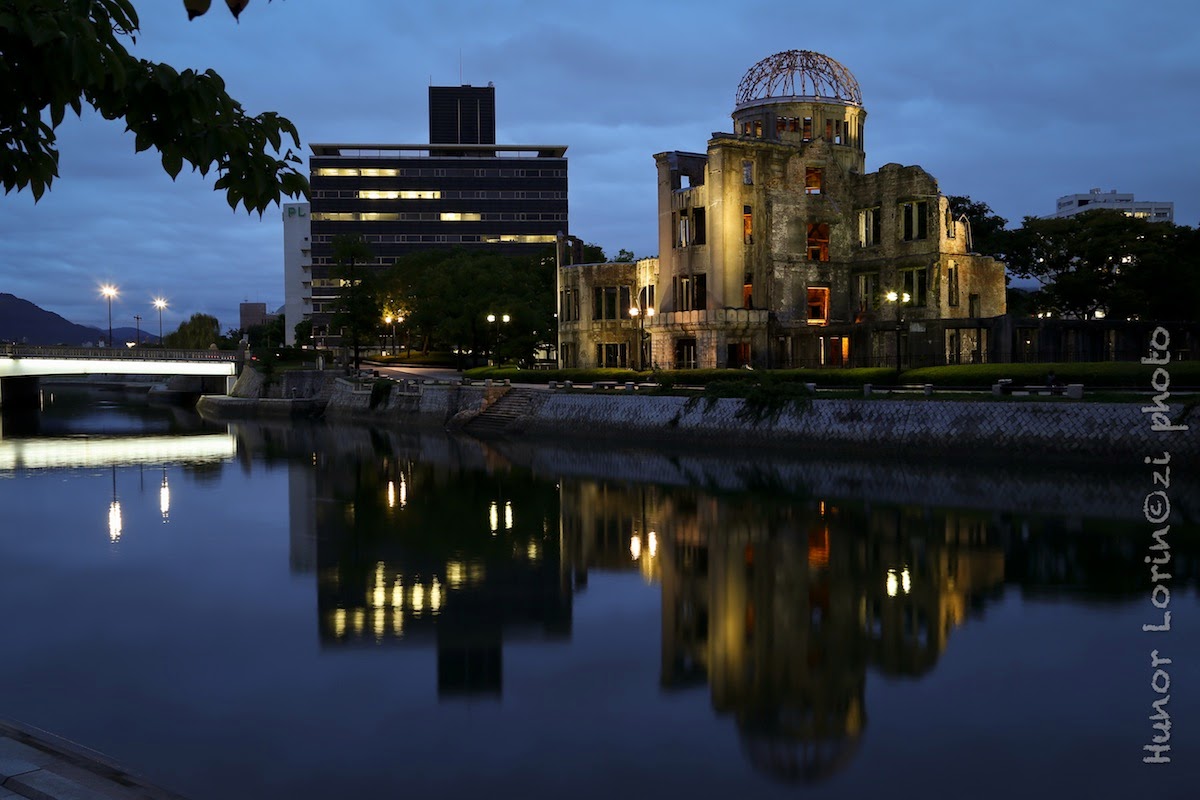
A mai napra viszont akarhogyan is nezzuk, az idonk veges es raadasul gyorsan is telik, es mi meg szeretnenk idoben visszajutni a hiroshimai Beke Emlekpark-ba is. Hiroshima neve azt hiszem sokunk szamara a vilagtortenelem egyik legborzalmasabb esemenye kapcsan ismert. Annak az epuletnek a maradvanya, mely folott 1945. augusztus 6-an ama bizonyos atombomba felrobbant, ma is helyreallitatlan formajaban lathato, orokre arra intve az emberiseget, hogy tanuljon multbeli hibaibol. Es erre az intesre egeszen biztos, hogy mindeki, aki erre jar mindig emlekezni fog. Fokeppen, ha a szep tagas, zoldello park kozepen a muzeumban is tesz egy setat, mely egeszen testkozelbol, szemelyes sorsokon keresztul mutatja be az atomrobbanas borzalmas kovetkezmenyeit. A muzeumban virtualis seta is teheto a kovetkezo veboldalon: http://www.pcf.city.hiroshima.jp/virtual/VirtualMuseum_e/tour_e/tour_fra_e.html 

1945. augusztus 6-an reggel 8.15-kor egy amerikai B29 bombaszallito repulo ledobta a vilag elso atombombajat. A bomba korulbelul 600 meteres magassagban robbant a Hiroshimai Megyei Ipari Bemutatokozpont epulete felett. A bomba ereje gyakorlatilag az egesz varost lesoporte a fold szinerol. Ennek az epuletnek a fo falai, mivel a legnyomas kozvetlenul felulrol erkezett, allva maradtak. 

Amikor megallt az ido...

  
A robbanas elott...

… es utan...

Minden alkalommal, amikor a vilag valamely orszagaban atomrobbanas tesztelest hajtanak vegre, Hiroshima polgarmestere levelet kuld, tiltakozva az atomenergia hasznalata ellen. 
Odakint az eso alabbhagyott es az eg lassan felderult mire koruljartuk a muzeum minden zeget-zugat, viszont megis megnehezult, elfelhozott lelekkel indulunk neki gyalogosan az immar esti szurkuletbe hajlott utcaknak. Utunk egyenesen a szallasunk fele vezet. Nem sokat beszelgetuk. A muzeum altal elenk tart mult latvanyat megemeszteni nem konnyed feladat. 


Masnapra az eso ujra teljes erejevel omlik az elsotetult varos nyakaba. Ugy hatarozunk, nem kell mindig menni valamerre. Az egesz napot hatalmas, tagas szallasunkon toltjuk pihenessel, ezzel-azzal, es kozben halas a szivunk, hogy ebben az idojarasban biztos fedel van a fejunk felett.  

11 Hiroshima

This was my second visit to this very touristy area of Japan. I have been here 10 years ago, visiting Japan for the first time as a student majoring in Japanese with a scholarship from the Japan Foundation. The beauty of Miyajima amazed me and the horror of the atomic bomb explained in detail at the Peace Memorial Museum struck me and I thought these are two things that should not be missed while in Japan so I wanted Hunor to be able to see these places. 
Well, we were not very lucky. After all the amazing sunny weather we got in the first weeks, it started to rain, a typhoon was on it's way. We were still very enthusiastic tourists, so we got up early in the morning and went to Miyajima, to get there before the crowds arrive, but it was hard to see the beauty of the place from under our plastic ponchos and through a curtain of rain. Even the deer who always wander around in the park stood freezing under cover. We arrived relatively early, so we headed for the must see, Itsukushima shrine, which is a shirne complex on the shore and a huge red shinto gate in the sea. Again we were not lucky, because apparently at high tide it looks like it is floating on the sea with the temples built on stilts right on the shore facing it. We came at low tide so it was not a breathtaking view. I started to get frustrated with the cold and the rain and our bad luck, but Hunor took it very well, so I managed to tune in to his mood and give up on trying not to get wet and simply stop complaining and it worked. One thing I got to learn (and have to practice more and more) while traveling is that when you give up all the expectations that exist nowhere else but in the guidebooks, in people's stories and in your imagination, you are finally free and open enough to embrace a place as it is at the moment you are there. We explored some of the more unknown temples in the back of the complex and had an amazing time. Senjokaku  (Pavilion of 1000 tatami mats) is just behind the Itsukushima shrine up on a hill. It was a massive hall, the ceiling and the walls full of paintings and sculptures of horses and battles and boats, each one with a mystical story lurking behind it. What we both liked most about the hall was the flooring. Hundreds of years old wooden floors, it felt like those immense pieces of wood with their simplicity could tell more stories than the banners and paintings above. For a few minutes I just walked and danced around on them, feeling their energy, stillness and patience. Then I sat down by one of the huge pillars on the ground and just watched the rain and listened to the thunder for the next half an hour. 

the shinto gate at low tide

When I go to a place I want to enter its atmosphere. It is something like being able to hear the heartbeat of a place for a short while. It is something beyond the guidebooks and beyond my understanding. It is a short period of time, sometimes a moment, sometimes an hour when a place with all its generosity and love turns to me, opens up for me and all my senses are fulfilled with its character. I feel the colors on my skin, I smell stories in the air and see sounds around me. I never know where or when I would get that feeling. Sometimes it comes at a spectacular spot, sometimes in the middle of nowhere but I need to be ready and accepting, no expectations, no frustrations (see above) to block my senses. This is the feeling that I love most about traveling. And I know Hunor has it too, but he would never put it the way I do. He is way more skeptical than that. But I can see it on his photographs. When a place opens up for him, he connects to it through his lens and the place shows him incredible images that he is then allowed to take with him as his photographs.  

We both had a time to connect with Miyajima in the dome of Senjokaku. Before that we were planning to head back to Hiroshima right away but now we had no problem with the rain and thunder. We hiked to Daisho-in, a big buddhist temple complex on the other end of the small town. You could find small jizo statues, official ones in the halls, and cute garden-gnome-like ones hidden in the bush, each of them happy and in a different pose. These small creatures were like small giggles at the foot of a serene temple, secretly stole happiness and life to our tour and as we were concentrating on trying to spot each one of them in the grass, they gave us a free and lighthearted lesson of awareness too. 

We headed back to the city because we wanted to save the afternoon for the Peace Memorial Park. Nuclear energy is not something humans can play around with without serous consequences and the memorial park with plenty of data, photographs and stories of people whose life was taken or brutalized forever by the tragedy of the atomic bomb, burns it into the visitors' head for good.
There is plenty of information about the exhibit, you can even take a virtual tour on the website of the Peace Memorial Park so I will leave thorough exploration and learning to the reader. However, there are two pieces of information that I have discovered on this visit and I will share those. One of them is a wall full of diplomatic letters. I have learned that every time a country does nuclear testing anywhere in the world, the mayor of Hiroshima sends a letter of protest asking them to stop using nuclear energy. He strongly hopes after each letter that it would be the last to write...


The other piece of information was the notion of "nuclear winter". This was the first time I heard about it in detail. I have took a photo of the explanation so I will let you read it for yourself.


Hiroshima is a beautiful city with lots of green areas, although after the atomic bomb, it was predicted that no greens would grow in the area for the next 70 years. The Peace Park with the ghostly Atomic Bomb Dome is a must visit in an time when the question of nuclear energy raises so many questions, doubts and concerns. 


It is not a light afternoon tour, but I would recommend it to anyone who wants to face the future by being brave enough to see the past. 

Thursday, December 19, 2013

10 Shikoku

We wanted to visit Shikoku, the smallest and remotest among the four main islands of Japan, because we have learned form experience that cities in Japan are constructed to be very functional: all concrete and look like they were made with copy and paste, not much surprise and soul food for someone as romantic as me and outdoorsy as Hunor. so wherever we can we look for the remote, the old and rundown and the countryside. However, we stayed longer at Rei's place than we originally planned and a typhoon was coming too, so eventually we didn't have the time and the guts to explore Shikoku, we just shortly passed by. Rei's family gave us a ride from Oita to the port of Saganoseki and from there we took a very short (70min) ferry ride to the tip of Shikoku, Misaki. As seasoned ferry-hitchhikers, we were the first to get off the boat and we were happily waving and smiling by the side of the road by the time the cars started to come. To our surprise, the first car stopped, a friendly young couple with a small kid, and they took us all the way to Matsushima, our destination, where or couchsurfing host was already expecting us. One thing I like about hitchhiking in Japan is that we know the language, so we can talk with the people, learn abut their life, their work, hear their stories. The young father who picked us up happened to work for the Japanese Self Defence Force as a first aid parachuter, which sounded very interesting so I asked him about his work in detail. How did it feel to jump for the first time? Has he got used to the feeling? Does wind make the jump difficult? He was very patient and answered all my questions. After our conversation his wife told him she had never heard so much about his work, so I guess it was good information for all of us. Meanwhile we were passing through a beautiful road winding on the northern coast of Shikoku, small fishing ports, islands in the calm inland sea on our left and mountains on our right. 
They took us all the way to Matsushima station where our host, Annlie was already waiting with her car. Given these circumstances it felt more like a luxury trip than a hitchhiking adventure. It turned out that we were Annlie's first couch surfers, so I felt the responsibility of giving a good impression for her about the system. She is a young medical student, speaks amazing English, and she is full of curiosity and ambition. She was interested in every detail of our trip from planning to the content of our backpacks. It was a good conversation, it made us sort our own thoughts once again concerning the decision of changing our lifestyle and planning our trip. We were proud and happy to show our backpacks, which became a lot lighter and compact after leaving much of our stuff with Rei and sending home a box of things. The eagerness Annlie was showing while listening to our story made me feel responsible for what I do and how I act while on the way. One thing that makes me happy is that I have never felt more authentic, living from my heart then now. I have the chance to experience something I have been dreaming about since childhood. I suppose the happiness and excitement are converted to energy and people around me can feel it. I hope they do, because that is the only thing i can give them for their generosity, for opening their homes, their cars and sharing their time with us. Annlie showed us around Matsushima, we went to the castle and Japan's oldest hot spring, Dogo. We sat down in front of the entrance and just watched people passing by in their yukatas. It was a beautiful sunset with sharp but gentle lights (perfect for Hunor to take pictures).

at Matsushima Castle with Annlie

Hunor taking a foot bath in front of Dogo onsen
the hometown of Matsu Basho, the famous haiku poet is the most poetic city ever: if you write a haiku on the bus you just put it in this box and it might be chosen for publishing 


The next day our destination was Hiroshima, already on the main island of Japan. We wanted to make it up there before the typhoon. Annlie's mom offered to give us a ride to Imabari, the city at the end of the bridge connecting Shikoku with Honshu. I was excited about the next ride, because it goes zig-zagging through small islands connected by bridges in the inland sea. The weather was still hot and it was our longest time to wait for a ride, more than an hour. An old man cutting the grass in a nearby parking lot came to us after about forty minutes, told us not to lose our spirits and handed us two bottles of cold soda with a smile.

Finally a small truck picked us up, and the high seats gave us a perfect view of the inland sea and the islands in the sunshine. 

Three rides later we were in Hiroshima by 7pm. We got a ride with a young university student, who was on his way back from buying his first car, so Hunor took photos of him with his new "baby". Then we met a family of six, who were going to a baseball match of the local team, Carps, and we also learned that this team is very special for the people of Hiroshima. It was founded shortly after the end of the war, as a sign of the locals will to survive even in the impossible conditions of the reconstruction after the atomic bomb. 


The local speciality in Hiroshima is okonomiyaki, which is something between an overfilled crepe and and a Spanish omelette. Veggies, meat and eggs. As we have learned, the big difference between the Hiroshima and Osaka style okonomiyaki is that Hiroshima puts even noodles in the mix. Don't ask me how, but it does work. We met up with my friend from university, Moe, who lives and works in Hiroshima after having graduated, and she invited us to an okonomiyaki dinner. After that we headed to our host's place which was an interesting experience by itself. A young japanese guy with an impossibly big apartment (especially for Japanese standards). He opened it up for counchsurfers, so it didn't feel like a one-to-one home stay thing as usual but more like a hostel. We were seven of us the night we arrived. There was a very active Colombian guy, who proudly introduced himself as someone from Barranquilla, the city of Shakira (well you can imagine that was enough to make me happy), he put on his music and gave a quick latin dance lesson to everyone. We were dancing for hours in the tatami room which was the most surprising ending to a day we started on another island a hundreds of kilometers away.


10 Shikoku


Augusztus 28. Ismet a bucsuzas napja. Ma athajozunk Shikoku-ra, mely a legkisebb Japan negy fo szigete kozul. Az Oita-kozeli Saganoseki kikotojebe Rei visz el minket egesz csaladi kiserettel, hogy illendoen elbucsuztassanak. Mikozben a mintegy 70 perces hajozasra indulunk, a kikotoben maradva Rei, az o edesanyja elettarsaval es a kis kilenc eves unokahuga mindaddig integetnek nekunk, mig csak kivehetonek tunik a tavolsagtol egyre zsugorodo alakjuk. 

Mai uticelunk Matsuyama varosa, ahol mar var rank kovetkezo szallasadonk. Matsuyama a hajonk erkezesenek helyetol mintegy szaz kilometernyire fekszik, ahova stoppolassal igyekszunk eljutni. Az eddigiekben is bevalt modszer jol mukodik. A hajot elsokent elhagyva, a lehajto autokat celozzuk. Tiz perc sem telik el, maris egy kedves fiatal csalad autojaban ulunk. Megtudjuk, hogy az edesapa a japan haderonel dolgozik helikopteres mentokent. Az erdekes tarsalgassal nemcsak gyorsan fogynak a kilometerek, de a beszelgetesbol az edesanya is sok ujdonsagot megtud ferje munkajarol. 

Matsuyama varosa madartavlatbol

Szallasadonkkal, Annlie-vel a talalkozot a matsuyamai vasutallomasnal beszeljuk meg, mely olyan jol sikerul, hogy megerkezve csak at kell tenni csomagjainkat az epp mellettunk parkolo autoba. Tovabbi kb tiz perc Annlie autojaban, es meg is erkezunk egy szep nagy csaladi hazhoz.  Annlie egyetemista diaklany es a szunetben a szuleinel lakik. Mint kesobb megtudjuk, a szulok nem ismerik a Couchsurfing rendszeret, igy Annlie korabban ugy jelentett be minket, mint egyik baratjanak a baratait. Igy nem csak szallast kapunk, mint az a couchsurfing-gel szokasos volna, hanem igazi vendegkent latnak minket. A lathatoan tehetos csalad tatamis vendegszobaja az elokeszitett fekhelyekkel, bekeszitett etellel, hutott itallal feler a legjobb szallodak szolgaltatasaival. 

A delutan klasszikus turistaskodassal telik. Annlie vegigvezet minket a varos nevezetessegein. Igy felkeressuk a matsuyamai varat, es a hires neves patinas furdot, a Doogoo onsent, ahol a japan csaszar a kulon szamara fenntartott furdoreszleget allitolag mar egyszer meg is latogatta.  Az estenk aztan kiralyi vacsoraval zarul Annlie csaladjanak vendegeikent.  

Matsuyama vara

Ama bizonyos hires neves Doogoo onsen, azaz furdo

Mi mast is vehetne az ide tevedo egyszeri turista, mint aranykakit mukival, azaz "Kakimukit" (kb 6000.-Ft-os aron persze… :)

Matsuyama a Haiku szerzes fovarosa. A villamoson elhelyezett dobozba barki  elhelyezheti hirtelen ihletettsegbol felfakado kis haiku koltemenyet.

Masnap, augusztus 29-en mar indulunk is tovabb Hiroshimat megcelozva. Koran reggel, bucsuzas elott, mielott az orvos-aneszteziologus apuka egy ujabb keso estig tarto munkanapra indul, a csoportkep keszites elmaradhatatlan. Anyuka pedig keszsegesen felajanlja, hogy a csalad tagasabb kocsijan elvisz minket egy megfelelo helyre a tovabbi stoppolashoz. 

Bucsuzas vendeglatonktol...


Hiroshima Matsuyamatol legvonalban tulajdonkeppen nincs is nagyon messze. Csupan a Shikoku es Honshu kozti keskeny beltenger valasztja el. Szarazfoldi kozlekedessel viszont korulbelul  ketszazotven kilometeres kiterovel lehet megkozeliteni.  A ket fosziget kozti apro szigetcsoporton keresztul vezet az ut, egyik kis szigetrol a masikra ativelo hidakon. A legkulonfelebb emberekkel van dolgunk. A forro napsutesben az elso fuvarunkra varva egy parkrendezo batyotol kapunk egy-egy hutott uditoitalt. Aztan egy autos, aki ugyan nem tud felvenni, szinten kinyujt a kocsijabol egy palack uditot. Aztan utazunk furgonban teherautosoforrel, utazunk felspecizett miniautojan autolakatos sraccal, elete elso autojat frissen megvasarolt egyetemistaval es vegul egy egesz kisbuszra valo baseball rajongo csaladdal. Ily modon aztan sotetedesre mar meg is erkezunk Hiroshimaba. 

Hidra fel es hidrol le 1.

Hidra fel es hidrol le 2.

Buszke autotulajdonos frissen vasarolt elso jarganyaval… no meg mi.

Tuesday, October 29, 2013

9 Oita

The next day my best friend, Rei and her family drove all the way to Aso from Oita to pick us up. Rei is a very close friend of mine, we met at the university, she was a guest lecturer at the textile department teaching bingata (Okinawan Dyeing). We connected very well from the first moment. She is bursting with energy, very creative, brave and very open too. Most of the time when i try to make Japanese friends, there is a wall that i can't break through but it was different with her. She asked my advice on her important decisions and she took me seriously but we had great laughs together too,  we can talk about everything. I couldn't wait to see her home and spend time with her again. She decided to leave Okinawa about a year ago and went back to her grandma's village to start her own textile dyeing studio in the old family house that hasn't been used for years after grandma had passed away. I was excited to see how this amazing idea and hard task was going. The Chitose Textile Dying Studio is a hub of creativity in the rural Japanese environment. It was entertaining to see the locals coming and peeping in every day, wondering what on earth was this girl doing in the village, She just smiles, shows everyone her new ideas and works and inspires people without even knowing it. I guess even her curious visitors themselves don't know but they keep coming back and bring her fresh vegetables, beer or other small presents. Her world brings color and fantasy to that little village.

Rei-chan, Lili (her niece) and us on the way to Ooita


We were sleeping at her studio, and were busy everyday. We kept asking her if there was anything we could help with, so finally Hunor renovated an old drum that Rei has to paint on, and carved a sign for the studio on granny's old cutting board. I did some English translations for her and worked on a photo-papercut that I had in mind after a sunset shot Hunor took of Rei and I the first night. We are both jumping, so I thought it would look good if i cut wings for us on the photo - to turn us into local angels. 
"Local Angels"

the drum Hunor is working on under the curious supervision of the girls from next door
one four year old asked me: "Is it your man?" "Yes" "You chose a good man!" she assured me and i thanked her.

Hunor carving the sign on granny's old cutting board


We were also busy with preparing to an event she organized for us. Sunday 25 August we were planning to do a screening of Under the Same Sun with a Hungarian and Okinawan mini concert. She and her family prepared everything, invited musicians, and arranged the place: the local Buddhist temple. When we first met the priest he seemed very cooperative but not very hopeful. He said people in this village are hard to get going so we should not expect more than around 30 people at most. I saw Rei was not very happy with the answer. She said she was hoping for a 100. Well, I told her, people who ask for miracles and work towards them, get miracles. She smiled and worked and worked, arranging meetings with the musicians, handing out flyers, brainstorming about decorations. Sunday, when we went to the temple, the place was all prepared, the priest cut bamboo sticks for a special light up and arranged the room for us. While we were preparing the food stall outside together with the priest Hunor had some time to ask a few practical questions from his "colleague" about church government and the everyday life of a buddhist temple. After all, a protestant pastor and a buddhist priest do not meet often so they need to use the opportunity for an inter-religious conference, right? The event started at 7, but people already started coming from 6 and soon the room was full, there were not enough seats for everyone. The sanshin  players started the event with three Okinawan songs, then it was my turn to sing Hungarian folk songs with a local guitarist and drummer. Then Hunor showed his skills on the jaw harp. When i was watching Hunor playing traditional Hungarian melodies on a jaw harp, jamming with a local blues-rock guitarist and a cajon drummer in a buddhist temple, followed by the curious eyes and ears of local farmers, I  was amazed how Rei's web of imagination could wrap all these people and bring them together in this funny capsule of time and space. As I looked at the full house I knew I was looking at a miracle, one that was asked for and worked for by Rei and it gave me goose bums. Her radiating creative energy inspires me so much! The priest told us after the event that there must have been around a 100 people and he has never had so many people at his temple before! Thanks Rei, for showing us a miracle.


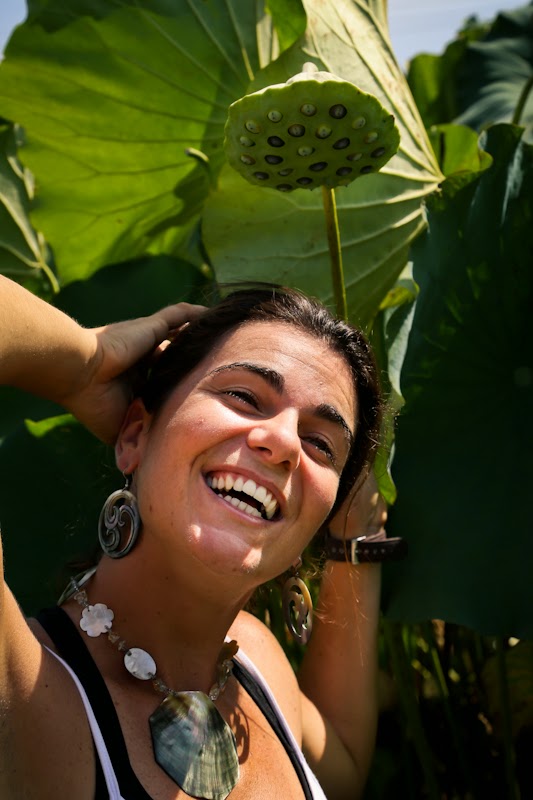
Rei made time for sightseeing too, we went to a lotus field, which was the first time for me to see this intricately elegant yet simply funny flower. They look like shower heads, but then they have these beautiful light pink blossoms and perfect petals and what's more, water-repellent leaves. I mean this all just sounds impossible and contradictory, but when you look at it, it makes sense. No wonder it is traditionally a holy flower, the flower of Buddha. 


After that we visited Beppu, a city famous for hot springs and we went to an interesting restaurant. The name is Hell Steam Restaurant (very inviting). All kinds of food are steamed in wells built on top of a sulphuric hot spring. It is said to be very healthy and it is delicious even without any extra spice, since the salt and the aroma of the hot spring penetrates the vegetables and meat. We also visited a hot spring, and took a mud bath. It was a great time but we smelled like pigs for about a week after. Especially because we did a small competition with Hunor: who can cover his/her full body more elaborately. 


Rei is so playful and active, and she also has a nine year old niece who is a small artist, so creativity is all around the place. We spent the nights drawing and painting together on big pieces of paper, being immersed in colors, lines and circles. She and her sister, her niece, her mom and her stepdad had a great impact on me. A loving and caring family of artists, living together, sharing their life, their food their love and their ideas. I was totally inspired by the week we spent together.


Wednesday, October 16, 2013

9 Oita


         Eppen a fagyit majszolgattuk nagy megelegedessel, melyet kis extrakent kaptunk legutobbi autosunktol, mikor megjelent Rei, teljes csaladi kiserettel, hogy tovabbvigyen minket falujaba, az Oita kozeli Chitose-ba. Rei-t mar regota ismerjuk Okinawarol. Mindig nagyon vidam, energikus, bobeszedu lany es meg sok egyeb is jellemzo ra, ami a japan lanyok tobbsegere tapasztalat szerint nem. Az okinawai muveszeti egyetemen ismerkedtunk ossze vele a bingata, azaz a helyi hagyomanyos textilfestes kapcsan. Nagyon sokat segitett Teodoranak mindenben, ami kapcsolatos volt a bingataval, igy az Egyazon nap alatt c. filmunknek is egyik alapfiguraja. Rei nemregen tert haza szulofalujaba, ahol regen elhunyt nagymamaja regi hazat alakitotta at bingata studiova. 

A Chitose Bingata Studio, azaz textilfestomuhely

Rei, akinek a portfoliojajoz keszitettunk nehany portre fotot
Reszlet Rei egyik bingatamuvebol 

Rei bingata
              Igazi kis muveszfeszek jott igy itt letre, olyannyira, hogy elso pillanattol osztonzest erzunk mindketten arra, hogy itt valamit alkotni kell. Teljesen mindegy, hogy mit, de ez a hely kizarolag arra valo, hogy az emberbol kihozza a maximalis kreativitast. 
           Hozza is latunk rogton az eziranyu tevekenyseghez. Teodora rajzol, fest, egyik naplementeben keszult fotomat kinyomtatva pedig egy egeszen kulonleges kepet hoz letre. A magam reszerol a fotozason kivul egy regi kopott dob restauralasa jut meg feladatul. Letisztitani a regi festekreteget, ujracsiszolni, elokesziteni az uj diszes festeshez. El kell arulnom, nagyon elvezem ezt a munkat. Nem gyakran van alkalma ez embernek egy regi patinas dobot felujitani :) Ugyanigy orommel veszem azt a feladatot is, hogy a nagymama egyik regi vagodeszkajabol cegtablat keszitsek a studio reszere. 

Dob restauralas elott...

...meg nincs keszen, egyelore elotte jobban nezett ki :)
Teodora rajza Yakushimarol

Teodora kepeslap

Kozos alkotasunk...

Keszen van az uj cegtabla


        Az itt toltott bo egy het legnagyobb esemenye azonban filmunk, az Egyazon nap alatt bemutatasa. Az elokeszuleteket Rei mar regota rendezi. A megfelelo helyszin felkutatasa, a szukseges kellekek beszerzese, hangositas, kivetito, no meg a kozonseg beszervezese nem kis feladat. Raadasul a filmvetitesen kivul kis musorral is keszulunk. Magyar nepdal, okinawai nepdal, dorombjatek eloadasaval, melyekhez vendegmuveszek, zeneszek bevonasara is sor kerul. Az esemenynek kulon patinat ad, hogy helyszinul a falu elegge regi, kopottas buddhista templomat sikerult megszerezni. A helyi pap csupan nehany evvel idosebb nalam, nagyon nyitott es segitokesz. Az elso terepszemle utan rengeteget dolgozott maris a vetites helyszinenek szamunkra megfelelo atalakitasan, szekek berendezesen, es nagy meglepetesunkre a vetites estejere koros korul ezernyi kis gyertyat helyezett el a kulon erre a celra elokeszitett bambuszcsovekben es bambuszleceken. Aznap az idojaras elegge esosre fordult, ugyhogy aggodtunk is, mi lesz ha este is csorog az eso. Vajon hanyan jonnek igy el. Keso delutanra azonban megszunt az eso es ugy begyult a vendegsereg, hogy a pap is megjegyezte, ennyien meg soha nem voltak a templomaban. Mintegy szazan jottek el, ami tekintve a falucska meretet, elegge szep teljesitmeny.

          
Kisse rejtelyes a filmbemutatonkhoz a bejarat...

Es ime talan a vilag elso buddhista temploma, ahol filmbemutatot rendeztek :)

elokeszuletek...

a templomot estere bambusz mecsesek szazai diszitettek

Bemutato elotti bemutatas :)

Nepes publikum
           Mindezen elfoglaltsagok, esemenyek mellett aztan meg kis kirandulasra is jut ido. Egyik nap delelottjen egy gyonyoruszep lotuszvirag telepet keresunk fel, onnan pedig irany a nem tul messzi Beppu varosaba, mely Japan szerte a termeszetes hevizfurdoirol ismert. Egy nagyon erdekes etteremben ebedelunk. Itt mindent alaposan atgozolve keszitenek el, de nem akarhogyan. A foldbol feltoro forrasban levo kenes viz gozet hasznaljak, az alapanyagot pedig tobbnyire a vendegek hozzak. Mindenki szabadon viheti kedvenc eteleit, husfeleket, zoldseget, gyumolcsot, tojast es mindenfelet, amit csak el lehet kepzelni gozolve, es az etterem csak magaert a gozolesert szamit fel dijat.  
A finom ebed utan aztan mi sem esik jobban mint egy kis dogonyozes a kenes iszapban. Egy furdot keresunk fel, ahol mielott megtisztulnal, elobb irgalmatlanul osszekenheted magad sarral. Hmm … arra gondolok, hogy lam lam, meg a malacoktol is van mit tanulni az embernek. Odahaza a falunk szelen bizonyara nem veletlenul uzik ugyanezt a tevekenyseget oly nagy elvezettel az utszeli sarban :) Es raadasul ok meg ingyen is reszesulnek az effele oromokben.   

Lotuszvirag

Zuhanyrozsa :)

Mindent gozolos etterem

Egy kis csillagszorozos moka

Vacsoraasztalnal Rei unokahugaval Lilii-vel es mi ketten

Edesanya lanyaival es unokajaval

Mind egyutt :)

             Osszesen nyolc napot toltunk Chitose falucskaban. Szep emlek marad az egyutt toltott ido, Rei, es a japanban igen ritka olaszos temperamentumu csalad, es a studioba nap mint nap bekoszono, vidaman elcsevereszo szomszedok.